
Our teeth play an important role in our daily life. They help us chew food, speak clearly, and maintain the shape of our face. Many people know they have different teeth, but they may not know their names. Each type of tooth has a special function in the mouth. Learning about teeth names helps us understand how our mouth works.
The human mouth contains several types of teeth, including incisors, canines, premolars, and molars. Each type has a different shape and purpose. Some teeth are designed for cutting food, while others are used for tearing and grinding. A simple teeth diagram can help show where each tooth is located. This makes it easier to understand how the teeth work together.
In this guide about teeth names, diagram, types, and functions, you will learn the names and roles of each tooth. We will also explain how many teeth adults and children have. Understanding these details can help you take better care of your teeth. Healthy teeth are important for eating, speaking, and overall health. Let’s explore the different teeth and their functions. 🦷
Types of Teeth and Their Names
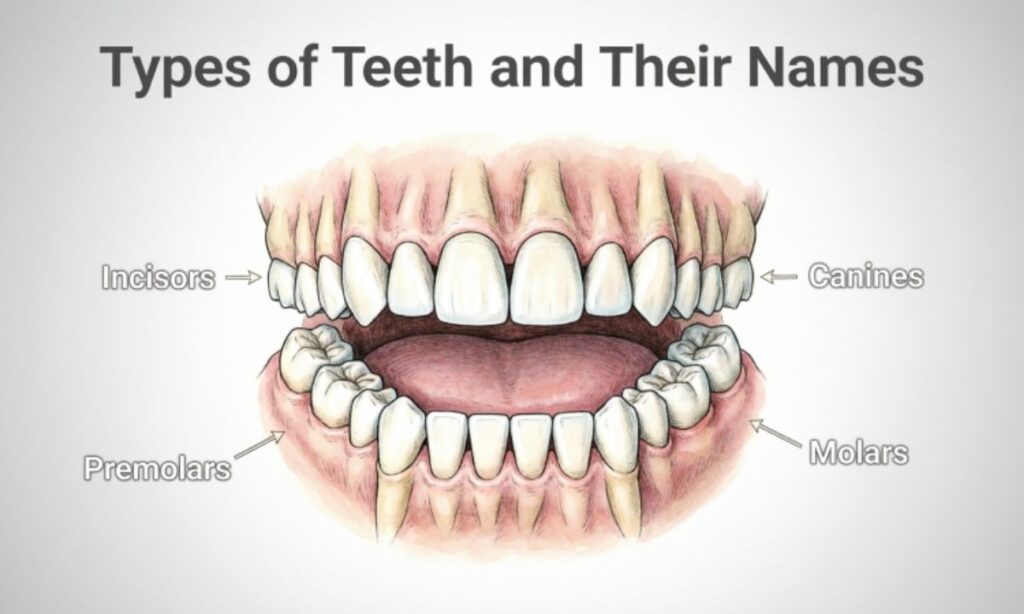
- Central Incisor Front – First tooth you see
- Lateral Incisor Side – Beside central always
- Canine Fang Sharp – Pointed tearing tooth
- First Premolar Bicuspid – Between canine molar
- Second Premolar Grinding – Behind first premolar
- First Molar Large – Biggest back tooth
- Second Molar Behind – Behind first molar
- Third Molar Wisdom – Last tooth erupts
- Deciduous Baby Teeth – First set falls
- Permanent Adult Teeth – Second set stays
- Primary Milk Teeth – Childhood temporary set
- Supernumerary Extra Teeth – Beyond normal count
- Hypodontia Missing Teeth – Fewer than normal
- Natal Teeth Present – Born with teeth
- Impacted Wisdom Teeth – Stuck beneath gum
- Erupted Teeth Visible – Breaking through gum
- Unerupted Teeth Hidden – Still beneath surface
- Anterior Front Teeth – Facing forward always
- Posterior Back Teeth – Located behind always
- Maxillary Upper Teeth – Top jaw residents
- Mandibular Lower Teeth – Bottom jaw residents
- Buccal Cheek Side – Facing cheek always
- Lingual Tongue Side – Facing tongue always
- Occlusal Biting Surface – Top chewing face
- Mesial Front Surface – Toward midline always
- Distal Back Surface – Away from midline
- Proximal Contact Surface – Touching adjacent tooth
- Interproximal Between Teeth – Space between adjacent
- Labial Lip Surface – Facing lips always
- Palatal Palate Facing – Toward roof mouth
Human Teeth Diagram and Structure
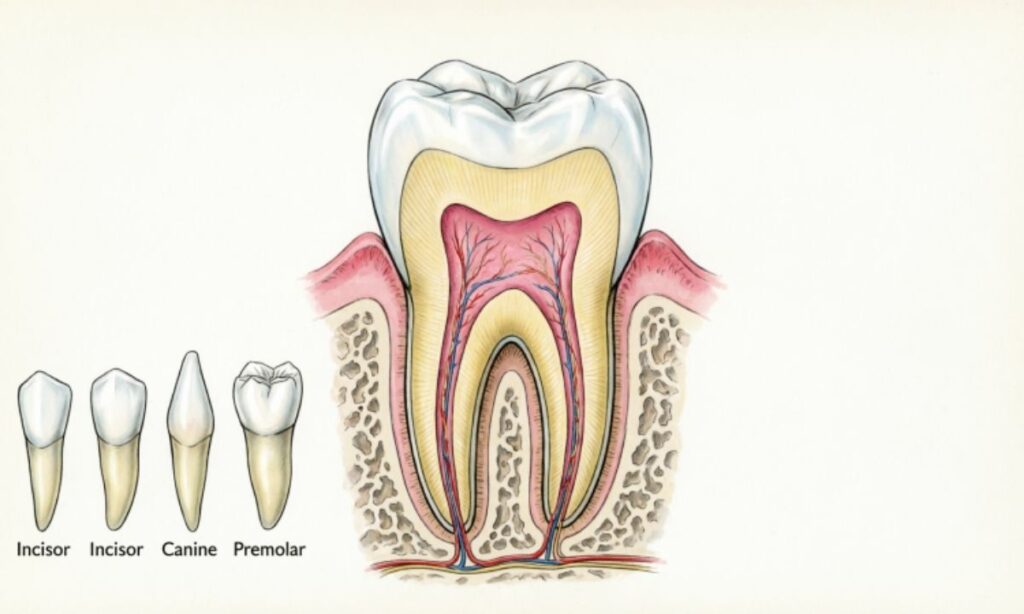
- Enamel Outer Layer – Hardest body substance
- Dentin Middle Layer – Beneath enamel always
- Pulp Inner Core – Living tooth center
- Cementum Root Cover – Covers root surface
- Periodontal Ligament Connects – Tooth meets bone
- Alveolar Bone Socket – Jaw bone housing
- Gingiva Gum Tissue – Soft surrounding tissue
- Crown Visible Part – Above gum line
- Root Hidden Part – Below gum line
- Neck Junction Point – Crown meets root
- Root Canal Pathway – Pulp travels through
- Apex Root Tip – Bottom of root
- Foramen Small Opening – Nerves blood enter
- Nerve Pulp Resident – Sensation provider always
- Blood Vessels Supply – Nourishment delivered internally
- Cusp Pointed Peak – Raised chewing surface
- Fissure Surface Groove – Natural tooth valley
- Pit Small Depression – Shallow surface indentation
- Ridge Elevated Line – Raised enamel line
- Lobe Developmental Section – Growth unit of tooth
- Furcation Root Division – Where roots separate
- Bifurcation Two Roots – Splitting into two
- Trifurcation Three Roots – Splitting into three
- Single Rooted Tooth – One root only
- Multi Rooted Tooth – Two or more
- Root Trunk Base – Before roots divide
- Cervical Line Junction – Enamel meets cementum
- Dentinal Tubules Tiny – Microscopic dentin channels
- Odontoblasts Dentin Cells – Producing dentin continuously
- Ameloblasts Enamel Cells – Creating enamel surface
Incisors Teeth: Function and Location
- Central Incisor Position – Middle front tooth
- Lateral Incisor Position – Beside central tooth
- Upper Central Incisors – Top front two
- Lower Central Incisors – Bottom front two
- Upper Lateral Incisors – Top side two
- Lower Lateral Incisors – Bottom side two
- Eight Incisors Total – Four top four
- Chisel Shaped Crown – Flat cutting edge
- Sharp Incisal Edge – Cuts food cleanly
- Single Root Structure – One root each
- Thin Narrow Crown – Slender tooth profile
- Biting Function Primary – Cutting food first
- Speech Function Secondary – Forming sounds correctly
- Aesthetic Function Important – Smile appearance determined
- First Teeth Erupt – Baby teeth first
- Permanent Replacement Follows – Adult teeth replace
- Central Erupts Six – Years approximately always
- Lateral Erupts Seven – Years approximately always
- Shovel Shaped Variation – Asian populations common
- Peg Lateral Anomaly – Small cone shaped
- Gemination Double Tooth – One tooth splits
- Fusion Two Together – Two teeth join
- Concrescence Roots Fused – Root merger occurs
- Diastema Gap Present – Space between teeth
- Crowding Common Problem – Insufficient space available
- Proclination Forward Tilt – Leaning forward abnormally
- Retroclination Backward Tilt – Leaning back abnormally
- Overbite Vertical Overlap – Upper covers lower
- Overjet Horizontal Protrusion – Upper in front
- Class One Ideal – Perfect bite relationship
Canine Teeth: Purpose and Importance
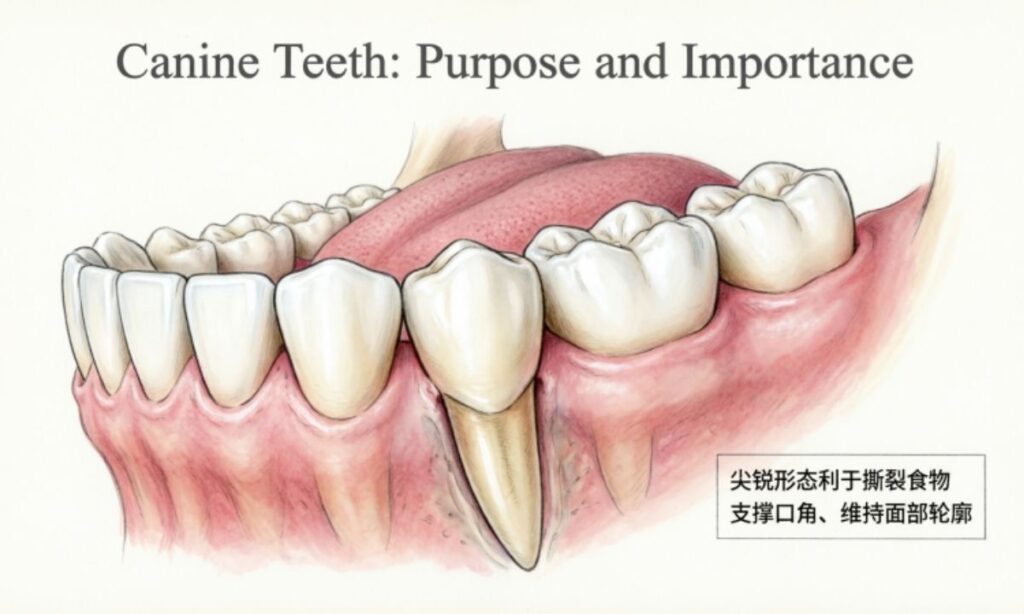
- Cuspid Another Name – Single cusp tooth
- Eyetooth Old Name – Beneath eye socket
- Four Canines Total – One each quadrant
- Upper Canine Position – Third from center
- Lower Canine Position – Third from center
- Longest Root Tooth – Deepest in jaw
- Pointed Crown Shape – Single sharp cusp
- Tearing Function Primary – Ripping food apart
- Guidance Function Critical – Directing jaw movement
- Canine Guidance Important – Protecting back teeth
- Aesthetic Role Significant – Smile corner defined
- Erupts Last Anteriors – Around eleven years
- Most Stable Tooth – Long root anchors
- Corner Tooth Position – Smile architecture defined
- Supporting Lips Structure – Facial profile maintained
- Proprioception Sensing Ability – Bite force detected
- Heavy Biting Forces – Withstanding significant pressure
- Single Cusp Characteristic – One pointed peak
- Prominent Labial Ridge – Visible front ridge
- Cingulum Lingual Feature – Small lingual bump
- Root Length Impressive – Longest single root
- Impaction Common Problem – Getting stuck frequently
- Upper Canine Impacted – Most commonly stuck
- Palatally Impacted Often – Stuck on palate
- Labially Impacted Sometimes – Stuck toward lip
- Transplantation Possible Procedure – Moving tooth surgically
- Space Maintenance Critical – Holding arch form
- Substitution Sometimes Needed – Premolar replaces canine
- Ectopic Eruption Problem – Erupting wrong position
- Canine Eminence Bone – Raised bone prominence
Premolars Teeth: Role in Chewing
- Bicuspid Another Name – Two cusps present
- First Premolar Position – Fourth tooth back
- Second Premolar Position – Fifth tooth back
- Eight Premolars Total – Two per quadrant
- No Premolars Below – Children lack them
- Replaces Primary Molars – Succeeds baby molars
- Transition Zone Tooth – Between canine molar
- Two Cusps Typical – Buccal lingual cusps
- Upper First Premolar – Often two roots
- Lower Premolars Single – Usually one root
- Crushing Function Primary – Breaking food down
- Grinding Function Secondary – Further reducing food
- Tearing Assistance Provided – Helping canine tear
- Buccal Cusp Larger – Outer cusp dominant
- Lingual Cusp Smaller – Inner cusp smaller
- Transverse Ridge Present – Connecting both cusps
- Central Groove Visible – Running between cusps
- Mesial Marginal Ridge – Front boundary present
- Distal Marginal Ridge – Back boundary present
- Orthodontic Extraction Common – Removed for braces
- First Premolar Extracted – Most commonly removed
- Space Creation Purpose – Making room movement
- Root Canal Treatment – Upper first complex
- Two Rooted Variation – Upper first sometimes
- Three Rooted Rare – Unusual anatomical variation
- Premolar Replacement Denture – Artificial tooth placed
- Implant Replacement Option – Titanium post placed
- Bridge Replacement Option – Spanning the gap
- Cusp Fracture Risk – Breaking under pressure
- Cracked Tooth Syndrome – Painful biting symptom
Molars Teeth: Function and Strength
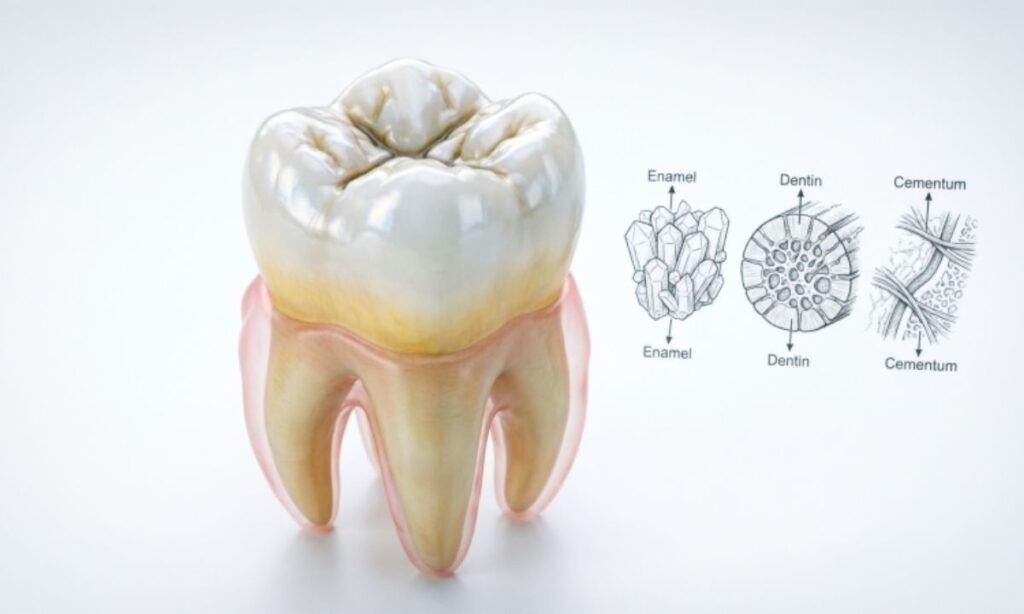
- First Molar Largest – Biggest permanent tooth
- Second Molar Behind – Behind first always
- Third Molar Wisdom – Last tooth erupts
- Twelve Molars Total – Including wisdom teeth
- Eight Without Wisdom – Excluding third molars
- Six Year Molar – First permanent eruption
- Twelve Year Molar – Second permanent eruption
- Wisdom Tooth Last – Seventeen to twenty-five
- Four Cusps Typical – Multiple chewing surfaces
- Five Cusps Sometimes – Lower first molar
- Upper Molar Roots – Three roots typically
- Lower Molar Roots – Two roots typically
- Grinding Function Primary – Main chewing purpose
- Crushing Hard Foods – Breaking tough substances
- Heavy Force Bearing – Withstanding greatest pressure
- Occlusal Surface Large – Biggest chewing surface
- Fissure Sealant Application – Protecting deep grooves
- Cavity Prone Surface – Grooves trap bacteria
- First Molar Important – Most critical permanent
- Lost First Impact – Arch collapse follows
- Space Maintenance Needed – Preventing tooth movement
- Wisdom Tooth Problems – Impaction pain infection
- Partial Eruption Issues – Pericoronitis risk present
- Full Impaction Types – Bony soft tissue
- Horizontal Impaction Worst – Lying completely sideways
- Vertical Impaction Common – Upright but stuck
- Mesioangular Most Common – Tilted toward front
- Distoangular Least Common – Tilted toward back
- Extraction Often Recommended – Removal preventing problems
- Molar Root Canal – Complex treatment required
How Many Teeth Do Adults Have?
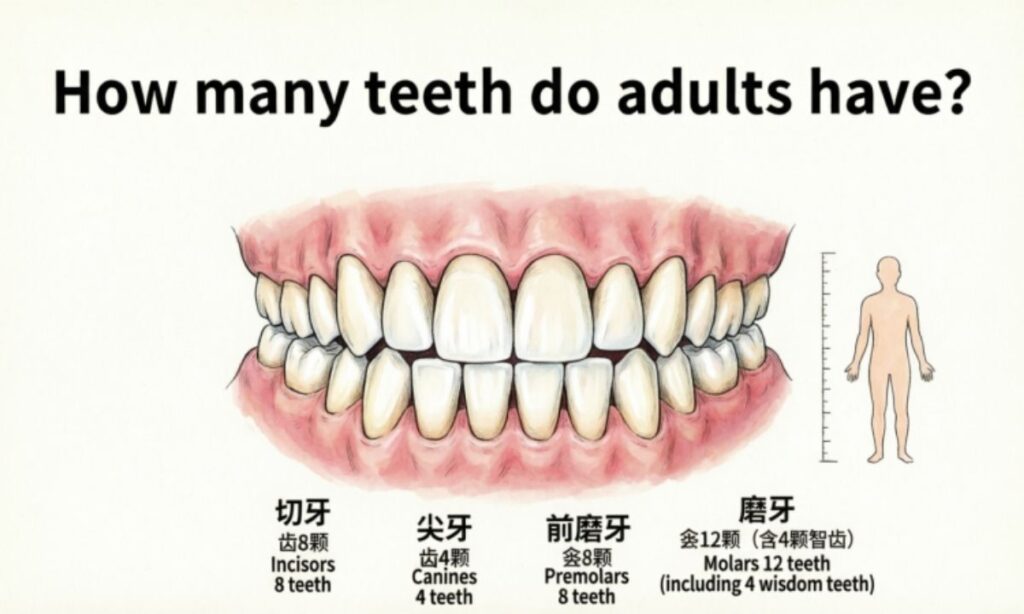
- Thirty Two Total – Complete adult dentition
- Twenty Eight Without – Excluding wisdom teeth
- Eight Incisors Total – Four top four
- Four Canines Total – One each corner
- Eight Premolars Total – Two each quadrant
- Eight Molars Without – Excluding wisdom teeth
- Four Wisdom Teeth – Third molars added
- Upper Sixteen Teeth – Complete maxillary arch
- Lower Sixteen Teeth – Complete mandibular arch
- Four Quadrants Total – Mouth divided equally
- Eight Teeth Quadrant – Each section contains
- Primary Teeth Twenty – Baby teeth complete
- Eight Primary Incisors – Four top four
- Four Primary Canines – One each corner
- Eight Primary Molars – No premolars exist
- Mixed Dentition Period – Baby adult coexisting
- Shedding Begins Six – Years approximately always
- Completed Around Twelve – All permanent except
- Wisdom Teeth Variable – May never erupt
- Hypodontia Missing Teeth – Fewer than normal
- Hyperdontia Extra Teeth – More than normal
- Mesiodens Extra Tooth – Between upper centrals
- Paramolar Extra Molar – Beside normal molar
- Distomolar Extra Tooth – Behind third molar
- Partial Dentition Adults – Tooth loss occurs
- Edentulous No Teeth – Complete tooth loss
- Denture Replacement Option – Full artificial set
- Implant Replacement Modern – Titanium permanent replacement
- Dental Bridge Option – Fixed replacement available
- Partial Denture Option – Replacing several teeth
Functions of Different Teeth in the Human Mouth
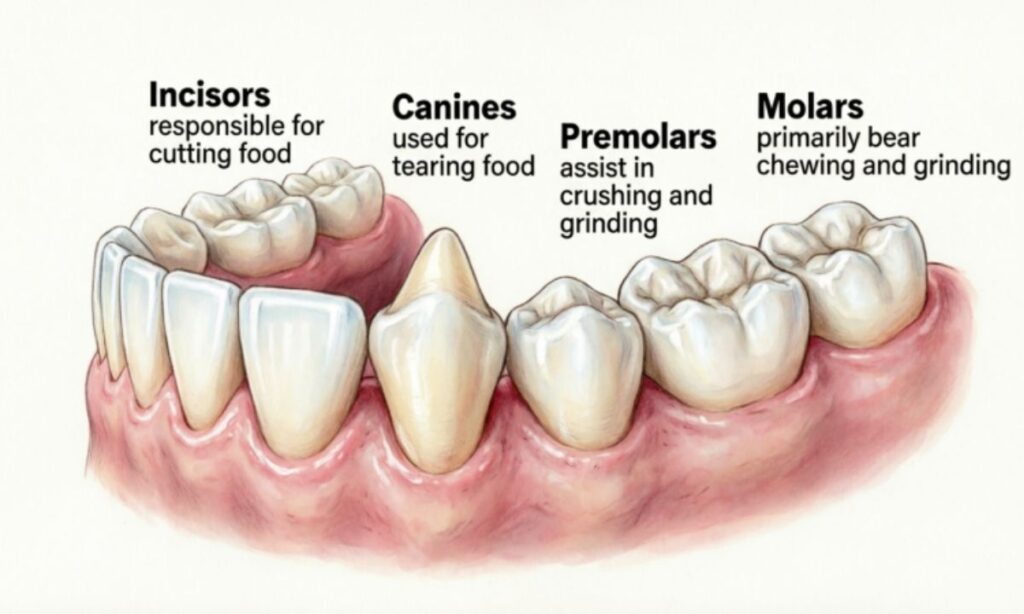
- Incisors Cut Food – Scissors like action
- Canines Tear Food – Ripping action performed
- Premolars Crush Food – Transitional grinding performed
- Molars Grind Food – Final breakdown achieved
- Teeth Aid Speech – Forming sounds correctly
- Teeth Support Lips – Facial structure maintained
- Teeth Define Smile – Aesthetic appearance created
- Teeth Maintain Space – Arch form preserved
- Teeth Guide Jaw – Movement direction controlled
- Canines Guide Movement – Lateral excursion directed
- Incisors Guide Protrusion – Forward movement directed
- Teeth Break Food – Mechanical digestion begins
- Mastication Primary Function – Chewing food thoroughly
- Bolus Formation Occurs – Food mixed saliva
- Swallowing Facilitated – Properly chewed food
- Digestion Efficiency Improved – Broken down food
- Nutrient Absorption Enhanced – Smaller particles absorbed
- Teeth Protect Jaw – Force distribution managed
- Proprioception Bite Force – Pressure detection active
- Reflex Protection Active – Biting forces moderated
- Teeth Anchor Muscles – Facial muscle attachment
- Temporomandibular Joint – Supported by teeth
- Vertical Dimension Maintained – Face height preserved
- Facial Aesthetics Supported – Cheeks lips supported
- Confidence Smile Provides – Psychological benefit given
- Social Interaction Enhanced – Communication improved always
- Professional Appearance Maintained – Career benefits observed
- Self Esteem Boosted – Appearance confidence connected
- Cultural Significance Holds – Teeth symbolize health
- Overall Health Indicator – Oral systemic connection
Frequently Asked Question
What are the different teeth names in the human mouth?
The main teeth names are incisors, canines, premolars, and molars. Each type helps with cutting, tearing, or grinding food.
How many teeth names are there in humans?
Humans have four main teeth names or types: incisors, canines, premolars, and molars.
What are the front teeth names?
The front teeth names are called incisors. They are used for cutting and biting food.
What are the sharp teeth names next to incisors?
The sharp teeth names next to incisors are canines. They help tear and grip food.
What are the back teeth names used for chewing?
The back teeth names are premolars and molars. They help crush and grind food while chewing.
How many teeth do adults have?
Adults usually have 32 teeth, including incisors, canines, premolars, and molars.
What are baby teeth names?
Baby teeth names are the same types as adult teeth but fewer in number, including incisors, canines, and molars.
Why are teeth names important to know?
Knowing teeth names helps people understand dental health and the function of each tooth.
Where can I see a teeth names diagram?
A teeth names diagram can be found in dental books, educational websites, or dentist guides.
Do all teeth have different functions?
Yes, different teeth names have different functions such as cutting, tearing, and grinding food. 🦷
Conclusion
Understanding teeth names helps us know the role of each tooth in our mouth. Incisors cut food, canines tear it, and premolars and molars grind it. A simple teeth diagram makes it easier to visualize where each tooth is located. Knowing the types and functions helps us take better care of our oral health.
Healthy teeth are essential for eating, speaking, and maintaining the shape of the face. By learning the names, types, and functions of teeth, we can prevent dental problems. Regular brushing, flossing, and dental checkups keep teeth strong and functional. Overall, knowing about teeth helps us maintain a healthy and confident smile.

Rehan is an experienced content writer at fitsname.com, specializing in name-related topics. He creates well-researched, creative, and easy-to-understand content focused on animal names, team names, group names, and unique naming ideas. With a strong passion for words and SEO-friendly writing, Rehan helps readers discover meaningful, catchy, and memorable names for every purpose. His goal is to make name selection simple, fun, and inspiring for everyone.