
If you have ever visited a chiropractor or an orthopedic doctor, you may have heard the word subluxation. It sounds complicated, but the concept is actually quite simple once you break it down. Whether you are experiencing joint pain, stiffness, or discomfort, understanding what subluxation means can help you make better decisions about your health.
In this article, we will explain the subluxation meaning in plain language, discuss its types, causes, symptoms, treatment options, and much more. By the end, you will have a solid understanding of this condition and why it matters.
What Is Subluxation? A Simple Definition
The word subluxation comes from two Latin roots: sub (meaning “below” or “partial”) and luxatio (meaning “dislocation”). So, at its most basic level, subluxation means a partial dislocation of a joint.
Unlike a complete dislocation where the bones fully separate from each other, a subluxation is when the joint surfaces are still in partial contact but are no longer in their correct, natural position. This misalignment can affect the surrounding muscles, nerves, ligaments, and blood vessels — which is why it can cause a wide range of symptoms.
Subluxation can happen in almost any joint in the body, including the spine, shoulder, knee, hip, elbow, and even the small joints of the fingers and toes.
Medical vs. Chiropractic Definition
It is important to know that the term subluxation is used differently in two major fields of medicine:
Medical/Orthopedic Definition: In mainstream medicine, subluxation refers strictly to an incomplete or partial dislocation of a joint where the bones are misaligned but still touching.
Chiropractic Definition: In chiropractic care, subluxation (often called “vertebral subluxation”) has a broader meaning. Chiropractors use it to describe a condition where spinal vertebrae are slightly out of alignment and are believed to interfere with the normal function of the nervous system.
Understanding which definition is being used helps you better understand the advice and treatment a healthcare provider is giving you.
Types of Subluxation You Should Know
Subluxation is not a one-size-fits-all condition. It can occur in different areas of the body and take different forms. Here is a breakdown of the most common types:
1. Spinal Subluxation (Vertebral Subluxation)
This is the most talked-about type, especially in chiropractic medicine. It refers to misalignment of the vertebrae in the spine. Since the spine houses and protects the spinal cord, even a slight misalignment can potentially affect nerve signals traveling through the body.
2. Shoulder Subluxation
The shoulder is one of the most mobile joints in the body, which also makes it one of the most vulnerable. Shoulder subluxation happens when the head of the upper arm bone (humerus) partially slips out of the shoulder socket. This is common in athletes and people who suffer strokes.
3. Patella Subluxation (Kneecap)
This type occurs when the kneecap (patella) shifts out of its normal groove at the front of the knee. It is often seen in teenagers and young athletes who are physically active.
4. Hip Subluxation
A partial dislocation of the hip joint. This can be a congenital condition (present from birth) or caused by trauma or degenerative joint disease.
5. Finger and Toe Subluxation
The small joints of the hands and feet can also experience partial dislocations, often due to sports injuries or accidents.
Common Causes of Subluxation
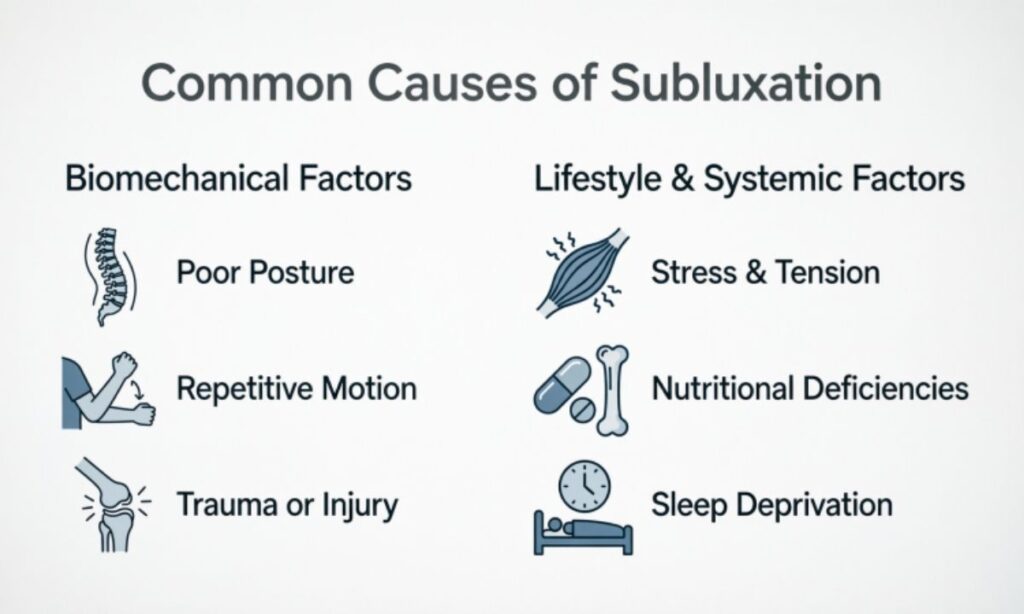
Subluxation can develop from a wide variety of causes. Here are the most frequently seen ones:
- Traumatic injuries — Car accidents, falls, or sports impacts are leading causes of sudden subluxation.
- Repetitive stress — Repeated movements over time can slowly wear down joint stability.
- Poor posture — Sitting or standing incorrectly for long periods places uneven stress on joints, especially in the spine.
- Weak muscles — Muscles support and stabilize joints. When they are weak, joints are more likely to shift out of place.
- Congenital factors — Some people are born with joint instability or structural differences that make subluxation more likely.
- Neurological conditions — Conditions like cerebral palsy or stroke can weaken the muscles that hold joints in position.
- Degenerative diseases — Arthritis and other joint diseases gradually erode joint structure and can lead to subluxation over time.
- Ligament laxity — Overly flexible or loose ligaments (sometimes called “double-jointedness”) can allow joints to move beyond their normal range.
Recognizing the Symptoms of Subluxation
The signs of subluxation can vary depending on where in the body it occurs and how severe the misalignment is. However, there are some general symptoms that are often present:
| Symptom | Description |
| Pain | Localized aching or sharp pain near the affected joint |
| Swelling | Inflammation around the joint area |
| Stiffness | Reduced range of motion or difficulty moving the joint |
| Instability | A feeling that the joint is loose or about to give way |
| Numbness or Tingling | Nerve compression can cause sensations in nearby limbs |
| Muscle Weakness | Reduced strength in the muscles surrounding the joint |
| Visible Deformity | In some cases, the joint may look visually out of place |
| Clicking or Popping | Unusual sounds when moving the affected joint |
| Headaches | Especially with cervical (neck) spinal subluxation |
| Fatigue | Chronic pain and muscle compensation can cause tiredness |
It is worth noting that some people with subluxation experience very mild symptoms or even no symptoms at all, especially in the early stages. This is why it is sometimes called a “silent” condition.
How Is Subluxation Diagnosed?
If you suspect you have a subluxation, seeing a qualified healthcare provider is the right first step. Here is how the diagnosis process typically works:
Physical Examination: The doctor or chiropractor will check your range of motion, posture, muscle strength, and the alignment of the suspected joint.
Patient History: You will be asked about recent injuries, your daily activities, occupation, and any symptoms you have been experiencing.
Imaging Tests: X-rays are the most commonly used tool to confirm subluxation and see the exact degree of misalignment. In some cases, an MRI or CT scan may be ordered to get a detailed look at soft tissue damage or nerve involvement.
Neurological Testing: If nerve involvement is suspected, additional tests may be performed to assess nerve function.
Treatment Options for Subluxation
The good news is that subluxation is a treatable condition. The right treatment depends on the location, cause, and severity of the subluxation. Here is a comprehensive overview:
Chiropractic Adjustment
Chiropractic adjustment (also called spinal manipulation) is one of the most well-known treatments for vertebral subluxation. A licensed chiropractor uses controlled, gentle force to realign the affected vertebrae. Many patients report relief from pain and improved mobility after regular chiropractic sessions.
Physical Therapy
A physical therapist can design a customized exercise program to strengthen the muscles that support the affected joint, improve flexibility, and restore normal movement patterns. This is often a long-term solution that helps prevent future subluxations.
Rest and Ice/Heat Therapy
For mild to moderate cases, rest combined with ice packs (to reduce swelling) or heat (to relax tight muscles) can provide significant relief, especially in the initial stages after an injury.
Bracing or Taping
Wearing a supportive brace or using kinesiology tape can help stabilize a joint that is prone to subluxation, especially during physical activity.
Medications
Over-the-counter pain relievers and anti-inflammatory medications can help manage pain and swelling. In more serious cases, a doctor may prescribe stronger medications or corticosteroid injections.
Surgical Intervention
In severe or recurrent cases where other treatments have failed, surgery may be necessary to repair damaged ligaments, tendons, or to permanently stabilize the joint.
Subluxation vs. Dislocation: Key Differences
Many people confuse subluxation with dislocation. While they are related, they are not the same thing. The table below highlights the key differences:
| Feature | Subluxation | Dislocation |
| Joint Contact | Partial — bones still touch | Complete — bones fully separate |
| Severity | Mild to moderate | Usually severe |
| Pain Level | Variable (mild to sharp) | Typically very intense |
| Visible Deformity | May or may not be present | Usually clearly visible |
| Treatment | Conservative care often works | Often requires immediate medical attention |
| Recovery Time | Shorter in most cases | Longer, may need surgery |
| Common Causes | Overuse, poor posture, minor trauma | Major trauma, high-impact accidents |
Subluxation in the Spine — Why It Deserves Special Attention
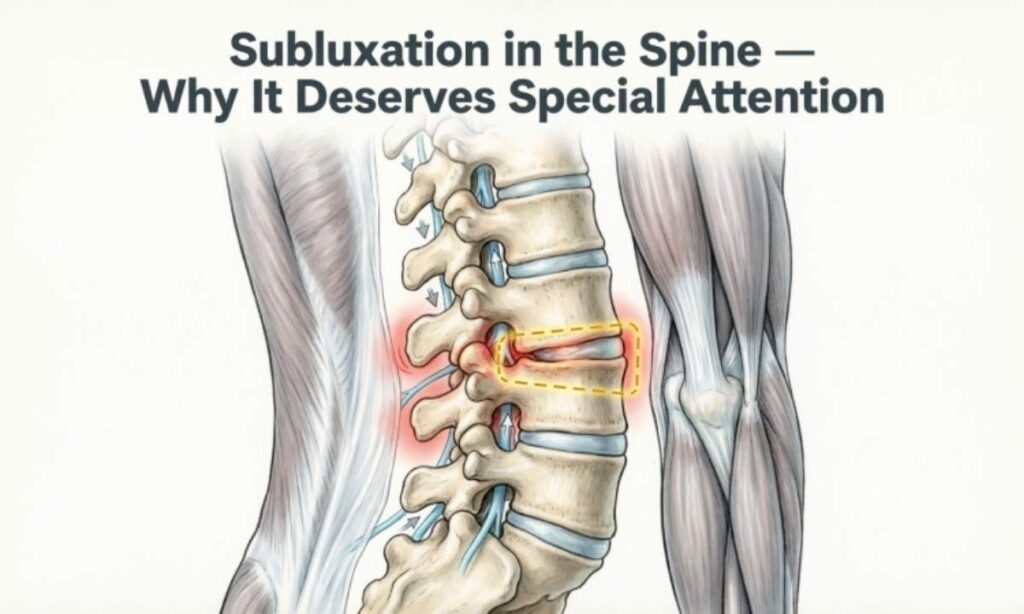
The spine is a complex structure that contains the spinal cord, which is the main highway for nerve signals between the brain and the rest of the body. This is why spinal subluxation receives so much attention, particularly in chiropractic care.
When a vertebra is out of alignment, it can:
- Put pressure on nearby nerve roots
- Restrict blood flow to the spinal cord
- Cause muscle spasms and tightness
- Lead to pain that radiates into the arms, legs, or other parts of the body
- Affect organ function in some chiropractic theories (though this remains debated in mainstream medicine)
The cervical spine (neck region) is especially important. Subluxation in this area is associated with headaches, neck pain, shoulder discomfort, and even dizziness in some cases.
Lumbar subluxation (lower back) is another very common location and is frequently linked to lower back pain, sciatica, and hip pain.
Prevention Tips: How to Protect Your Joints
Preventing subluxation is often much easier than treating it. Here are practical steps you can take to keep your joints healthy and properly aligned:
- Maintain good posture — Whether sitting at a desk or standing in line, keeping your spine neutral reduces unnecessary stress on your joints.
- Exercise regularly — Strengthening your core, back, and shoulder muscles provides natural support for your joints.
- Warm up before physical activity — Cold muscles and stiff joints are more vulnerable to injury.
- Use ergonomic furniture — A supportive chair and a proper desk setup can make a big difference for people who sit for long hours.
- Wear proper footwear — Shoes with good arch support help maintain proper alignment from the ground up.
- Lift correctly — Bend your knees and keep your back straight when lifting heavy objects.
- Stay hydrated — Cartilage in joints is largely water, so hydration keeps your joints cushioned and healthy.
- See a professional regularly — Regular checkups with a chiropractor or physical therapist can catch small alignment issues before they become bigger problems.
Frequently Asked Questions
Can subluxation heal on its own?
Minor subluxations, especially in otherwise healthyindividuals, can sometimes resolve with rest and home care. However, more significant cases — particularly spinal subluxations — usually benefit from professional treatment.
Is subluxation the same as a pinched nerve?
Not exactly. A subluxation can cause a pinched nerve if the misaligned joint compresses a nearby nerve root. But a pinched nerve can also have other causes, such as a herniated disc or bone spurs.
How long does it take to recover from subluxation?
Recovery time varies widely. A mild subluxation may resolve in a few days to a couple of weeks. More severe cases or chronic subluxations may require months of treatment and rehabilitation.
Can children get subluxation?
Yes. Children can develop subluxations from falls, sports activities, or even from birth trauma during delivery. Pediatric chiropractic care exists specifically to address this.
Is chiropractic care safe for subluxation?
For most people, chiropractic adjustments for subluxation are considered safe when performed by a licensed professional. Always inform your chiropractor about your full medical history before beginning treatment.
Final Thoughts on Subluxation Meaning
Understanding the subluxation meaning empowers you to take better care of your body. In simple terms, it is a partial dislocation where a joint is slightly out of its normal position — enough to cause discomfort, pain, and in some cases, interference with normal nerve and muscle function.
Whether it occurs in the spine, shoulder, knee, or another joint, subluxation is a condition that responds well to the right care. From chiropractic adjustments and physical therapy to rest and lifestyle changes, there are many effective paths to recovery.
If you are experiencing any of the symptoms described in this article, do not ignore them. Early diagnosis and treatment can prevent a small misalignment from turning into a long-term problem. Consult a qualified healthcare professional who can assess your specific situation and guide you toward the best treatment plan for your needs.

Rehan is an experienced content writer at fitsname.com, specializing in name-related topics. He creates well-researched, creative, and easy-to-understand content focused on animal names, team names, group names, and unique naming ideas. With a strong passion for words and SEO-friendly writing, Rehan helps readers discover meaningful, catchy, and memorable names for every purpose. His goal is to make name selection simple, fun, and inspiring for everyone.