
JSP is a popular short text word that many people use in online chats every day. It can have more than one meaning depending on the message and the situation. Most commonly, JSP means “just playing” or “just saying” in casual conversations. People use it while texting friends on social media apps and messaging platforms. Understanding JSP can help you read modern slang more easily.
When someone says something funny or playful, they may add JSP at the end. In this case, it usually means they are joking and not being serious. Sometimes JSP is also used when a person wants to share an opinion quickly. The exact meaning often depends on the full sentence and tone of the chat. That is why context is very important when reading text abbreviations.
Today, many young people use short forms like JSP to save time while chatting online. These slang words make texting faster, easier, and more fun for users. You may often see JSP on Snapchat, TikTok, Instagram, or private messages. Learning these common terms helps you stay updated with internet trends. JSP is simple, useful, and now part of everyday texting culture.
What Does JSP Mean in Text? (Quick Answer)
Quick Answer
JSP stands for “Just Saying, Period” — used to emphasize a point with humor, sarcasm, or playful confidence after making a statement.
If someone sends you a message that ends with JSP, they are essentially putting a punctuation mark on something they said — not literally with a period, but emotionally. They are telling you that what they just said is their firm, unapologetic opinion, usually delivered with a light or humorous tone. Think of it as the texting equivalent of dropping the mic and walking away, except with a smirk rather than an aggressive exit.
The phrase is almost always used in informal contexts between people who know each other well. It adds personality and emphasis to a message without making it sound aggressive or confrontational. When used correctly, JSP makes a conversation feel playful, confident, and natural — like the sender knows exactly what they think and is comfortable enough with you to say it plainly.
Why People Use JSP in Texting
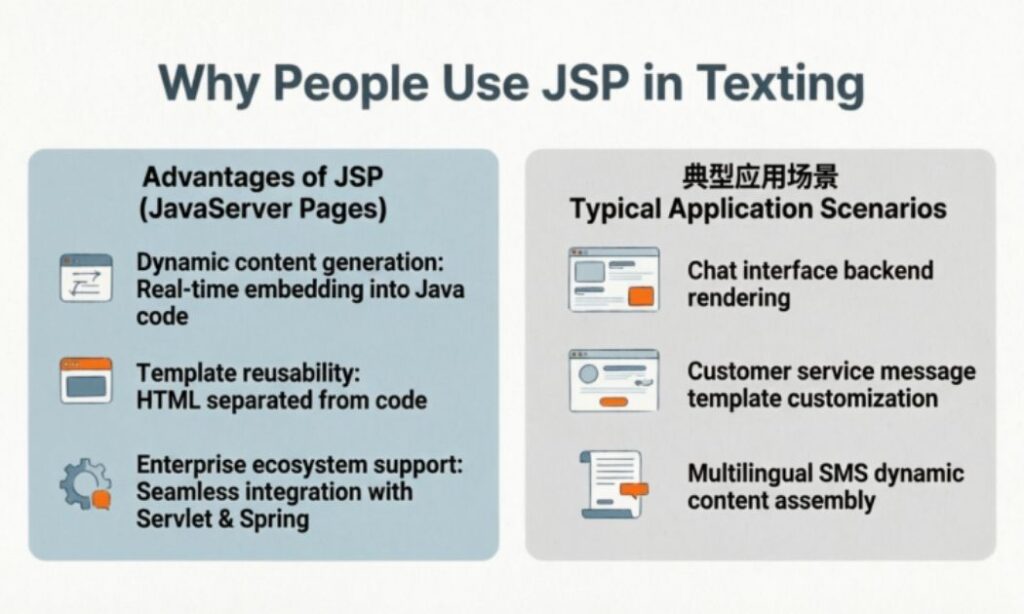
Language in digital communication is always evolving because the needs of digital communication keep changing. When people text, they are working without tone of voice, facial expressions, or body language — all the things that normally carry a huge amount of meaning in face-to-face conversation. Abbreviations and slang fill in some of that gap, and JSP is a particularly useful one because it communicates not just a message but a specific emotional posture.
1. To Show Humor Clearly
One of the trickiest things about texting is that humor does not always land the way you intend it to. A joke that would be obvious in person can read as completely serious in a text, which leads to awkward misunderstandings. JSP helps solve this problem by flagging that the sender is being playful rather than genuinely critical or confrontational. Adding JSP at the end of a bold or provocative statement is a way of saying: I mean this, but I am also fully aware how it sounds, and I am okay with that.
2. To Avoid Misunderstanding
Related to the humor issue is the broader problem of tone in written communication. Without vocal inflection, even neutral statements can come across as harsh or cold. JSP acts as a tonal softener — it tells the reader that what came before it was not meant to start an argument or wound feelings, but rather to share a genuine thought in a light-hearted way. It is the digital equivalent of saying something with a smile.
3. To Keep Conversations Light
Sometimes people want to share a real opinion without turning the conversation heavy or serious. JSP provides a kind of social permission slip — it allows the speaker to be honest about what they think while simultaneously keeping the emotional temperature of the exchange low and friendly. It signals that the observation is not a big deal and does not require a defensive or serious response.
Origin of JSP (Where Did It Come From?)
Like most texting slang, JSP did not have a single inventor or a definitive moment of creation. It evolved organically out of the broader “just saying” expression that has been part of English casual speech for decades. The phrase “just saying” has long been used at the end of statements to take some of the edge off a pointed remark — it acknowledges that the speaker knows their comment might not be entirely welcome but delivers it anyway with a light touch.
The addition of “period” at the end transforms “just saying” into something more emphatic. In contemporary slang, especially among Gen Z speakers, adding “period” or “periodt” to a statement means that there is nothing more to debate — the point has been made and the speaker stands firmly behind it. Combining these two elements into the abbreviation JSP creates a compact way of saying: this is my honest take, I am delivering it without apology, but I am not trying to start a fight about it.
The abbreviation itself spread primarily through social media platforms and text messaging, gaining particular traction on Twitter, Instagram, and TikTok where short, punchy expressions naturally thrive. It is closely related to the broader family of “just saying” derivatives and sits comfortably alongside similar expressions like JK (just kidding), NGL (not gonna lie), and IMO (in my opinion) in the vocabulary of digital casual communication.
| Slang Term | Full Form | Similar Energy to JSP? | Key Difference |
| JSP | Just Saying, Period | — | Confident and emphatic with humor |
| JK | Just Kidding | Partially | Retracts a statement; JSP stands by it |
| NGL | Not Gonna Lie | Yes | NGL sets up honesty; JSP closes it |
| IMO | In My Opinion | Yes | IMO is more formal and less playful |
| TBH | To Be Honest | Yes | TBH introduces; JSP concludes |
| JFYI | Just For Your Info | Partially | JFYI is informational; JSP is opinionated |
Real-Life Examples of JSP in Conversations
The best way to understand how any piece of slang actually works is to see it in real conversational context. Here are three examples of JSP being used the way people actually use it — with the specific tone and relationship dynamic each one reflects.
Example 1: Friendly Teasing
Friend A:
“You always cancel plans at the last minute. You literally did it three times this month. JSP.”
Friend B:
“Okay okay, you’re right. I’ve been terrible lately 😭”
In this example, JSP softens what could easily sound like a harsh accusation into something that reads as friendly accountability. The person saying it is being honest about a real pattern of behavior, but the JSP tells the recipient that it is coming from a place of affection rather than genuine resentment. Friend B’s relaxed response confirms that the tone landed correctly.
Example 2: Social Media Comment
Comment on a food photo:
“That pizza honestly looks better than anything from that overpriced place downtown. JSP 😂”
Here JSP is being used on a public platform to make a confident, mildly controversial food opinion sound playful rather than aggressive. The laughing emoji alongside JSP makes the tone even lighter, and the combination tells anyone reading it that this is good-natured commentary rather than a genuine attack on a local business.
Example 3: Texting Mood Swings
Person A:
“I genuinely feel better when I’m not on social media. My mood is completely different. JSP.”
Person B:
“That’s actually facts. Same here honestly.”
This use of JSP is more reflective than teasing. The person is sharing a genuine personal observation and using JSP to signal that they are being real about their experience without necessarily inviting a long debate about social media. It keeps the exchange feeling conversational rather than turning into a lecture.
Emotional Meaning Behind JSP (Not Just Slang)
It would be a mistake to treat JSP as purely a surface-level abbreviation with no deeper significance. Like all frequently used language, it carries emotional content that goes beyond its literal meaning. Understanding those emotional layers helps explain why it has become so widely used and why it resonates with the people who use it most.
Playfulness
At its core, JSP is a playful expression. It belongs to a family of speech acts that communicate genuine thoughts through a tone of lightness and humor rather than seriousness. Using JSP is a way of showing that you do not take yourself too seriously even while expressing a real opinion — and in contemporary digital culture, where heavy and serious communication can so easily escalate into conflict, the ability to be real and playful at the same time is genuinely valuable.
Emotional Safety
JSP also creates a kind of emotional safety in conversation. By flagging a statement as “just saying” with a period, the speaker is acknowledging that the comment is their opinion rather than a universal truth, while simultaneously standing behind it without excessive hedging. This balance — honest without being pushy, confident without being aggressive — creates space for the other person to agree, disagree, or laugh without feeling cornered or judged.
Personality Indicator
The way someone uses JSP, and how often they use it, tends to reflect something genuine about their personality. People who reach for JSP frequently are usually comfortable in their own skin, have a developed sense of humor, enjoy light banter, and are confident enough in their relationships to be direct without worrying excessively about how every word will be received. It is a small linguistic signal of a certain kind of social confidence and ease.
Where Is JSP Commonly Used?
Social Media
Social media is the natural home of JSP. Platforms like Twitter, Instagram, TikTok, and Snapchat are all environments where short, punchy, personality-driven communication is rewarded, and JSP fits perfectly into that format. It appears in comments, captions, direct messages, and even in the text overlay of videos where creators are making a bold or humorous point about something they genuinely believe.
Friends & Close Relationships
JSP is most commonly and most comfortably used between people who know each other well. The closer the relationship, the more naturally JSP fits into the conversation — because the context and tone of the relationship provide the framework that helps the recipient correctly interpret the playful intention behind the expression.
Romantic Context
In romantic or flirtatious texting, JSP can carry an extra layer of meaning. Using it to express a compliment or a teasing observation adds a confident, slightly cheeky quality that many people find appealing in early-stage romantic communication. It signals self-assurance without arrogance and honesty without desperation — a combination that tends to land well in flirty exchanges.
Professional Settings (Avoid It)
This is the context where JSP absolutely should not appear. Work emails, professional messages, client communications, and any setting that requires formal or respectful tone are entirely wrong for this expression. Using JSP in a professional context would come across as unprofessional at best and disrespectful at worst, and it carries none of the relational warmth that makes it work in personal settings.
JSP vs Other Texting Abbreviations
Understanding JSP becomes clearer when you compare it to some of the other abbreviations it sits alongside in everyday digital communication. Each of these expressions carves out a slightly different emotional and conversational space, and knowing the differences helps you use each one more precisely and effectively.
| Abbreviation | Meaning | Tone | When to Use |
| JSP | Just Saying, Period | Confident, playful, emphatic | After a bold honest opinion or observation |
| NGL | Not Gonna Lie | Honest, direct, candid | Before admitting something you might normally hide |
| TBH | To Be Honest | Sincere, slightly vulnerable | Before an honest personal opinion or admission |
| JK | Just Kidding | Backtracking, light, humorous | After something that might be taken wrong |
| ISTG | I Swear to God | Exasperated, passionate | When emphasizing something strongly |
| PERIODT | Period (emphatic) | Final, unapologetic, firm | When closing a debate with confidence |
| IMO | In My Opinion | Moderate, measured | Softening a potentially controversial view |
Common Variations of JSP
Language in digital spaces is fluid and creative, and JSP has naturally spawned a number of related forms that people use depending on the situation, the platform, and their personal communication style.
Popular Forms
- JSP — the standard form, clean and widely understood
- js periodt — written out in full lowercase, popular on TikTok and Twitter among Gen Z users
- just saying lol — the more casual, explicit version with humor added via “lol”
- js tho — a softer version that adds “though” to make it feel a little less emphatic
- jus sayin — a phonetic, relaxed spelling that emphasizes casual tone
- JSP 💀 — often combined with the skull emoji to signal the statement is darkly humorous or brutally honest
- JSP fr — adding “fr” (for real) increases the sincerity level behind the statement
Common Misunderstandings About JSP
Like any slang expression, JSP is sometimes misread or misunderstood by people who are not familiar with how it works. These misunderstandings can lead to unnecessary friction in conversations, so it is worth knowing what the most common ones are.
1. Taking It Seriously
The most frequent mistake people make with JSP is taking it as a signal of genuine aggression or hard criticism rather than playful honesty. If someone who knows you well says something about your habits followed by JSP, they are almost certainly not trying to start an argument — they are sharing a real observation in a light-hearted way. Reading hostility into JSP where none was intended leads to unnecessary defensive responses that can derail otherwise easy conversations.
2. Confusing It with Technical Meaning
In web development and programming, JSP stands for Java Server Pages — a server-side technology used in software development. If someone in a coding forum or a work Slack channel uses JSP, they are almost certainly referring to the technical term rather than the texting slang. Context is everything with abbreviations, and this is a case where the same three letters carry completely different meanings depending on the setting.
3. Thinking It’s Rude
Some people, particularly those less familiar with contemporary texting culture, interpret the “period” element of JSP as aggressive or dismissive — as if the speaker is shutting down conversation rather than contributing to it. In reality the “period” signals confidence and finality, not dismissiveness. It is a way of saying: I mean this and I am comfortable saying it, rather than: the conversation is over and I do not want to hear your response.
| Misunderstanding | What People Think | What It Actually Means |
| Taking it seriously | “They’re genuinely attacking me” | It’s a playful, honest observation with no aggression |
| Technical confusion | “Are they talking about coding?” | Check context — JSP in casual chat = texting slang |
| Thinking it’s rude | “They’re shutting me down” | It’s emphatic confidence, not conversation-ending rudeness |
| Overanalyzing | “What are they really trying to say?” | Usually exactly what they said — nothing hidden |
When NOT to Use JSP
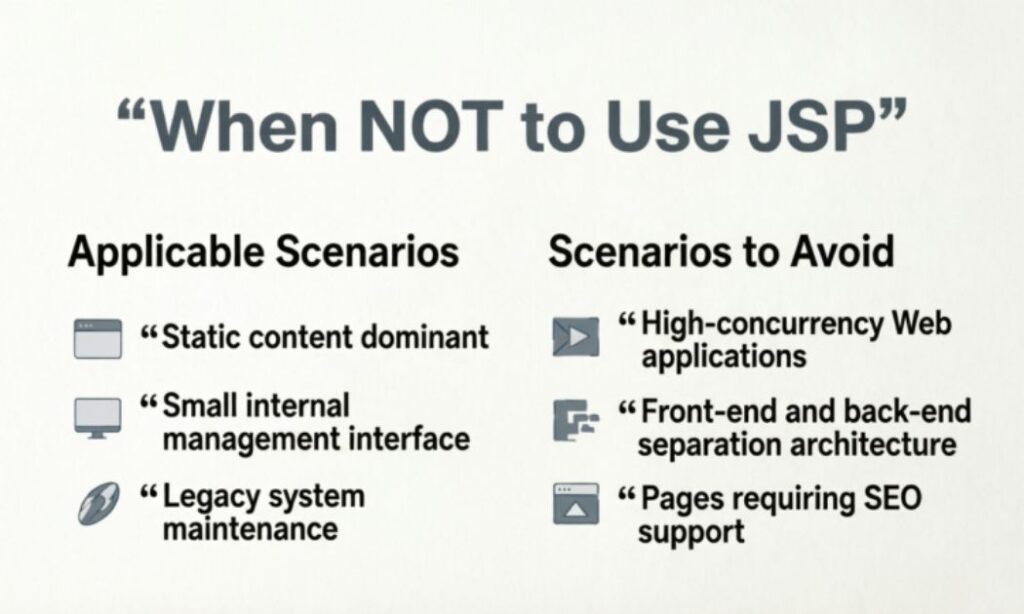
Knowing when not to use a piece of slang is just as important as knowing what it means. JSP is a strong and casual expression, and there are several situations where deploying it would create the wrong impression or cause unnecessary problems.
- professional emails, messages to employers, or any work-related communication
- When texting someone you do not know well — JSP requires established rapport to land correctly
- In situations that are already emotionally charged or where someone is genuinely upset
- When the topic being discussed is sensitive, serious, or requires genuine empathy
- In academic writing, formal essays, or any written content with a professional audience
- When addressing someone significantly older who may not be familiar with contemporary slang
- In contexts where it might be interpreted as dismissive toward someone’s genuine concern
How to Respond When Someone Says JSP
Receiving a JSP from someone can catch you off guard if you have not seen it much before — but once you understand the tone it carries, responding becomes very natural. The right response depends on the context and the relationship, but here are some options across different emotional registers.
Casual Responses
Casual
“Lol okay fair enough”
Casual
“Alright, I’ll give you that one”
Casual
“Facts honestly 😂”
Funny Responses
Funny
“Not you calling me out like this 💀”
Funny
“I felt that in my chest ngl”
Funny
“This is personal attack behavior and I’m not okay 😭”
Slightly Flirty
Flirty
“You’re bold for that one 😏”
Flirty
“Okay I see you, noted 👀”
Flirty
“Going to pretend I didn’t read that… but I did”
Advanced Insight: When JSP Can Backfire
JSP is a reliable tool in casual communication, but like any tool it can cause problems when used incorrectly or in the wrong environment. Understanding its failure modes helps you use it more effectively and avoid the situations where it creates friction instead of connection.
Sarcasm Doesn’t Always Translate
JSP often works hand-in-hand with sarcasm, and sarcasm is one of the most frequently misread tones in text-based communication. If the statement before JSP is genuinely sarcastic but the recipient does not read it that way, the JSP at the end will not save the message from being taken at face value. Whenever sarcasm is a significant part of what you are communicating, an emoji or an explicit “lol” alongside JSP significantly reduces the risk of misreading.
No Emojis = Risk
JSP on its own, without any supporting emoji or contextual cue, carries more risk of being misread than JSP paired with a laughing face, a skull emoji, or another visual signal of the intended tone. In relationships where you are not yet completely certain the other person will read your playful tone correctly, adding a visual cushion alongside JSP is worth the extra second it takes.
Overusing JSP
Like all expressions, JSP loses its punch when it is used too frequently. If every statement you make ends with JSP, the expression stops feeling emphatic and starts feeling like a verbal tic — a filler phrase rather than a meaningful tonal marker. Keeping it for situations where it genuinely adds value preserves its effectiveness and keeps your communication feeling fresh rather than formulaic.
Cultural & Generational Differences
No piece of slang exists in a cultural vacuum, and JSP is no exception. Its reception and usage vary significantly across different age groups, cultural backgrounds, and geographic contexts — and being aware of those differences helps you use it more appropriately and interpret it more accurately when you encounter it.
Younger Users
Among Gen Z and younger Millennials, JSP is a natural and unremarkable part of everyday digital communication. People in this age group use it fluidly, understand it instinctively, and have no difficulty reading the tone it is meant to convey. For this demographic it is not slang that requires explanation — it is simply part of how they communicate with each other online and via text.
Older Users
For older Millennials, Gen X, and Baby Boomers, JSP may be entirely unfamiliar or may be interpreted in ways that do not match its intended meaning. The technical meaning — Java Server Pages — is significantly more likely to come to mind for someone with a technology background from an earlier era than the texting slang meaning. If you are communicating with someone in an older demographic, either avoid JSP or be prepared to explain it, because the gap in cultural context can lead to genuine confusion.
Global Usage
JSP is primarily an English-language internet phenomenon, and its usage and recognition varies significantly across different countries and language communities. In English-speaking countries with high social media penetration — the United States, the United Kingdom, Canada, Australia — it circulates widely among younger users. In non-English-speaking countries it appears mainly among people who consume large amounts of English-language content online and are integrated into global internet culture. Outside those communities it remains largely unknown.
JSP vs Tone in Texting (Deep Dive)
One of the biggest challenges of text-based communication is that human beings are extremely sophisticated interpreters of tone in spoken conversation — we process vocal pitch, pace, volume, and inflection almost unconsciously — but that entire channel of information disappears the moment communication moves to text. Abbreviations like JSP are part of a broader toolkit that people have developed to partially compensate for that loss.
JSP specifically addresses the problem of emphatic confident humor — the tone you use when you are being fully serious about something while also being fully aware of how funny or bold it sounds. In spoken conversation this tone is usually unmistakable: the slight smile in the voice, the timing of the delivery, the specific rhythm of how the words fall. In text, none of those cues exist, which is exactly where JSP earns its keep.
| Tone Challenge in Texting | How JSP Helps | Example |
| Sarcasm reads as sincere | Flags the playful intention | “You’re such a morning person JSP 😂” |
| Honesty reads as aggression | Softens direct statements | “That outfit wasn’t your best look JSP” |
| Confidence reads as arrogance | Lightens bold claims | “I make better coffee than any café JSP” |
| Observation reads as criticism | Frames it as commentary not judgment | “You do this every time lol JSP” |
| Opinion reads as fact | Implies personal ownership of view | “This is the best movie this year JSP” |
The relationship between JSP and tone in texting ultimately comes down to this: it is a bridge between what you mean and what the person reading your message is likely to understand. Used well, it closes the gap between intention and interpretation that is one of the defining frustrations of digital communication. Used poorly — without context, in the wrong relationship, or with the wrong audience — it can widen that gap instead of closing it.
Understanding JSP in its full context means understanding it not just as three letters but as a small but meaningful piece of how human beings have adapted their communication instincts to a digital world that strips away most of the cues they normally rely on. It is, in that sense, a genuinely interesting little window into the creative ways that language evolves to meet new challenges — and the fact that it has become so widely understood and used tells you something real about the needs it is meeting for the people who reach for it every day.
| Quick Reference | Detail |
| Full meaning | Just Saying, Period |
| Tone | Playful, confident, emphatic, light-hearted |
| Best used | Among friends, on social media, in casual texting |
| Avoid using | At work, with strangers, in serious emotional conversations |
| Common user group | Gen Z and younger Millennials primarily |
| Similar expressions | NGL, TBH, JK, PERIODT, IMO |
| Technical confusion risk | Yes — JSP also means Java Server Pages in programming |
| Backfire risk | Overuse, no emoji support, wrong audience |
| Origin | Evolved from “just saying” + “period” in internet slang |
| Platform popularity | Twitter, TikTok, Instagram, iMessage, WhatsApp |
Frequently Asked Question
What does JSP mean in text messages?
JSP usually means “just saying” or “just playing” in text messages. The meaning depends on the sentence and chat tone.
What does JSP stand for in texting?
In texting, JSP commonly stands for “just saying” or “just playing.” People use it in casual online conversations.
How do people use JSP in a text?
People use JSP after a joke, opinion, or playful comment. It helps explain their message clearly.
Is JSP a slang word in texting?
Yes, JSP is an internet slang term used in chats and social media messages. It is common among younger users.
Does JSP mean just saying?
Yes, one popular meaning of JSP is “just saying.” It is often used after giving an opinion.
Does JSP mean just playing?
Yes, JSP can also mean “just playing.” It is used when someone is joking or teasing.
Where is JSP used the most online?
JSP is often used on Snapchat, TikTok, Instagram, and private text messages. It appears in casual chats.
How can I know the real meaning of JSP?
You can know the meaning by reading the full message and understanding the tone. Context matters most.
Is JSP used by young people?
Yes, JSP is mostly used by teens and young adults in fast online conversations. It is part of texting culture.
Should I use JSP in formal messages?
No, JSP is casual slang and is better for friendly chats. It is not ideal for professional or formal messages.
Conclusion
JSP is a common texting word with simple meanings like “just saying” or “just playing.” It is mostly used in casual chats with friends online. The real meaning depends on the full message and tone. Learning it can make texting easier to understand.
Many people use JSP on social media and messaging apps every day. It helps save time and keeps chats short and fun. Knowing terms like JSP helps you follow modern internet slang. It is a small word with useful meaning in texting.

Rehan is an experienced content writer at fitsname.com, specializing in name-related topics. He creates well-researched, creative, and easy-to-understand content focused on animal names, team names, group names, and unique naming ideas. With a strong passion for words and SEO-friendly writing, Rehan helps readers discover meaningful, catchy, and memorable names for every purpose. His goal is to make name selection simple, fun, and inspiring for everyone.